Seven and a half people. One AI agent. £16.6 million in social value.
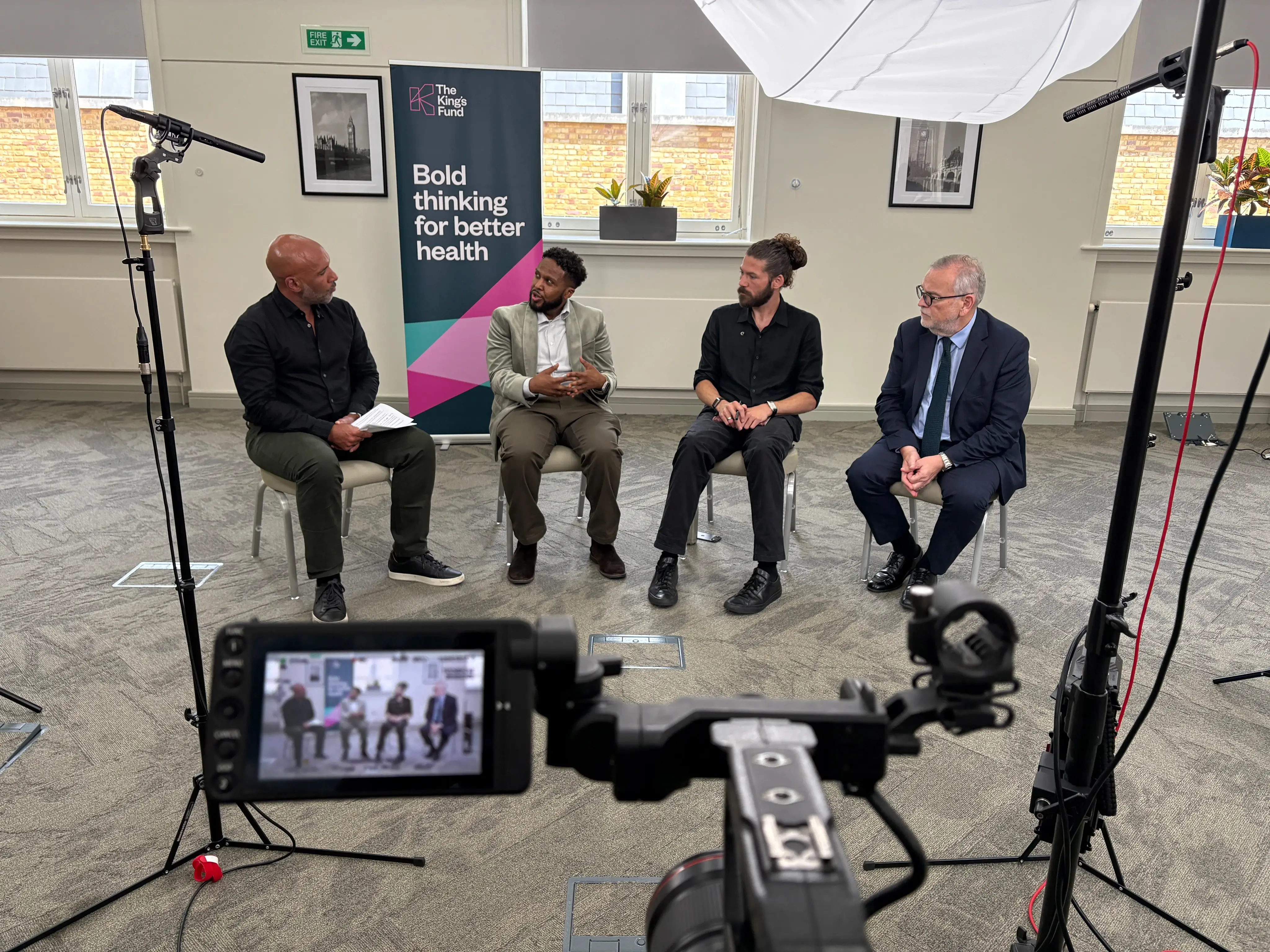
Our CTO Joey took the stage at The King's Fund: Digital health and AI conference 2026, joining a session on "Leading digital and AI change in constrained and complex systems", chaired by Mark Patterson, Senior Consultant for Leadership & Organisational Development at The King's Fund.
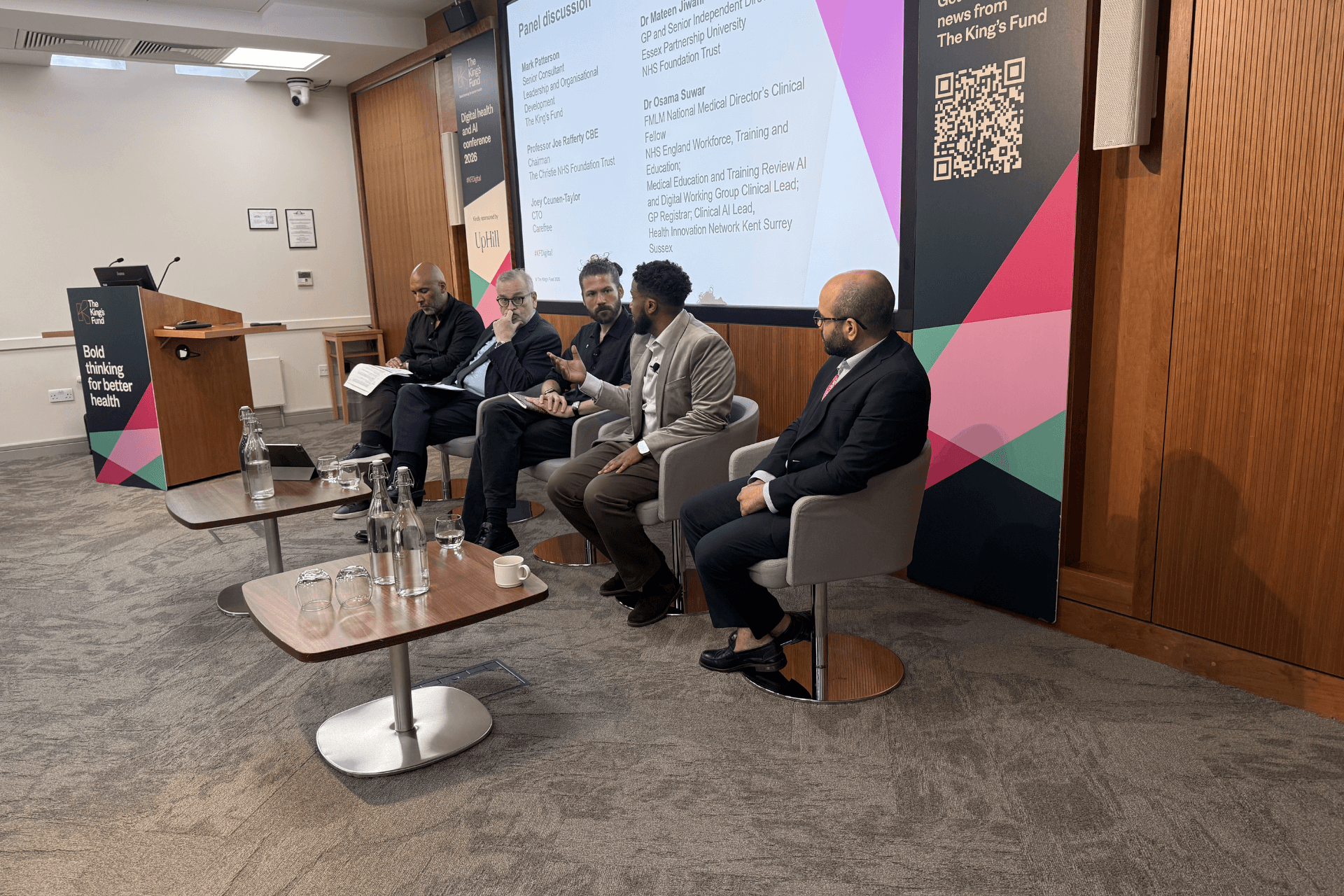
The conference theme, building an AI-enabled health and care system that works for people, could have been written for Carefree. We support unpaid carers across the UK by turning vacant hotel rooms into much-needed breaks. We do it with a team of just seven and a half, on a budget under £800k. And over the last year, AI has become the only way we could keep up with the scale of the need.
Here's what Joey shared with the room.
The constraint that forced the change
Carefree exists to reach some of the 5.4 million unpaid carers in the UK. With a team our size, that was always going to be impossible without technology doing most of the heavy lifting.
The numbers tell the story better than we can:
50,000+ registered unpaid carers supported
20,000+ breaks delivered in total
8,000 of those delivered in the last year alone, more than the previous seven years combined
£16.6m of social value delivered last year, on a budget under £800k
~1 million proactive "smart" messages sent per year
75% of the roughly 4,000 individual inbound messages we receive are now handled entirely by our AI agent, at a 92% satisfaction score
The shift to being genuinely "AI-first" all happened within the last twelve months.
Automation carries the load, so humans can carry the care
One of the clearest points Joey made was that AI at Carefree isn't about replacing people, it's about protecting their time for the parts of the job that actually need a human. We once trialled phone bookings and found the average call ran 90 minutes. With just the number of customer support agents we have, that model was never going to scale.
So the repetitive admin goes to AI and automation, and the team focuses on genuine emotional support. The newest example of this, run by the customer support team rather than the tech team, is evolving our conversational AI from a simple booking tool into something closer to a travel agent, helping carers who often haven't been away in years prepare for their break, know what to expect, and arrange support for the person they care for while they're gone.
A culture where it's safe to experiment
None of this works without a team that feels able to try things. Carefree runs on a simple traffic-light system so everyone knows what they can and can't experiment with, sitting inside clear AI policy and governance. There's no room for "shiny" AI side-projects, every experiment has to return value immediately, and that constraint is what makes the team want to try, not what holds them back.
That habit of showing where something didn't work, and treating that as useful information rather than failure, is part of what gives the team confidence to keep experimenting.
Transparency beats fear
AI is unsettling largely because it's hard to understand. Even people who build these systems struggle to explain them simply. Our approach with beneficiaries is radical transparency: clearly labelling when AI is involved, and explaining in plain language what's being asked, what's stored, and how it's processed. Counter-intuitively, being upfront about AI improves conversion and reduces drop-off, rather than putting people off. Internally, it's the same principle: a plain-language AI policy, regular training, and a model that acts as a guide within clear guardrails.
The honest tensions
Joey was candid about the parts of this story that are still unresolved. The popular narrative is that AI is cheap and simply replaces staff, but frontier models are getting more expensive and more resource-intensive, and our AI spend is climbing. Right now it comes out of our general tech line rather than a dedicated grant, and it works only because the outcomes still outweigh the cost. That needs watching. There's also a broader question Joey stays alert to: the ethics and environmental footprint of the AI providers we depend on, and the gap between AI "utopia" and "end of the world" narratives that dominate public debate.
Don't skip leg day
Joey's advice to other leaders in constrained systems was simple: get the unglamorous infrastructure right first, and make sure your team feels safe, with transparency and trust as the foundation. That groundwork, plus clear governance and policy, is what makes fast, low-risk experimentation possible afterwards. It's not exciting work, but it's the work that pays off.
Carefree has been delivering breaks to unpaid carers for eight years. If you're an unpaid carer and provide 30+ hours of care you can sign up for two hotel breaks per year below.